No Slowing
What can a dance, woven from the land by the women who live there, do?
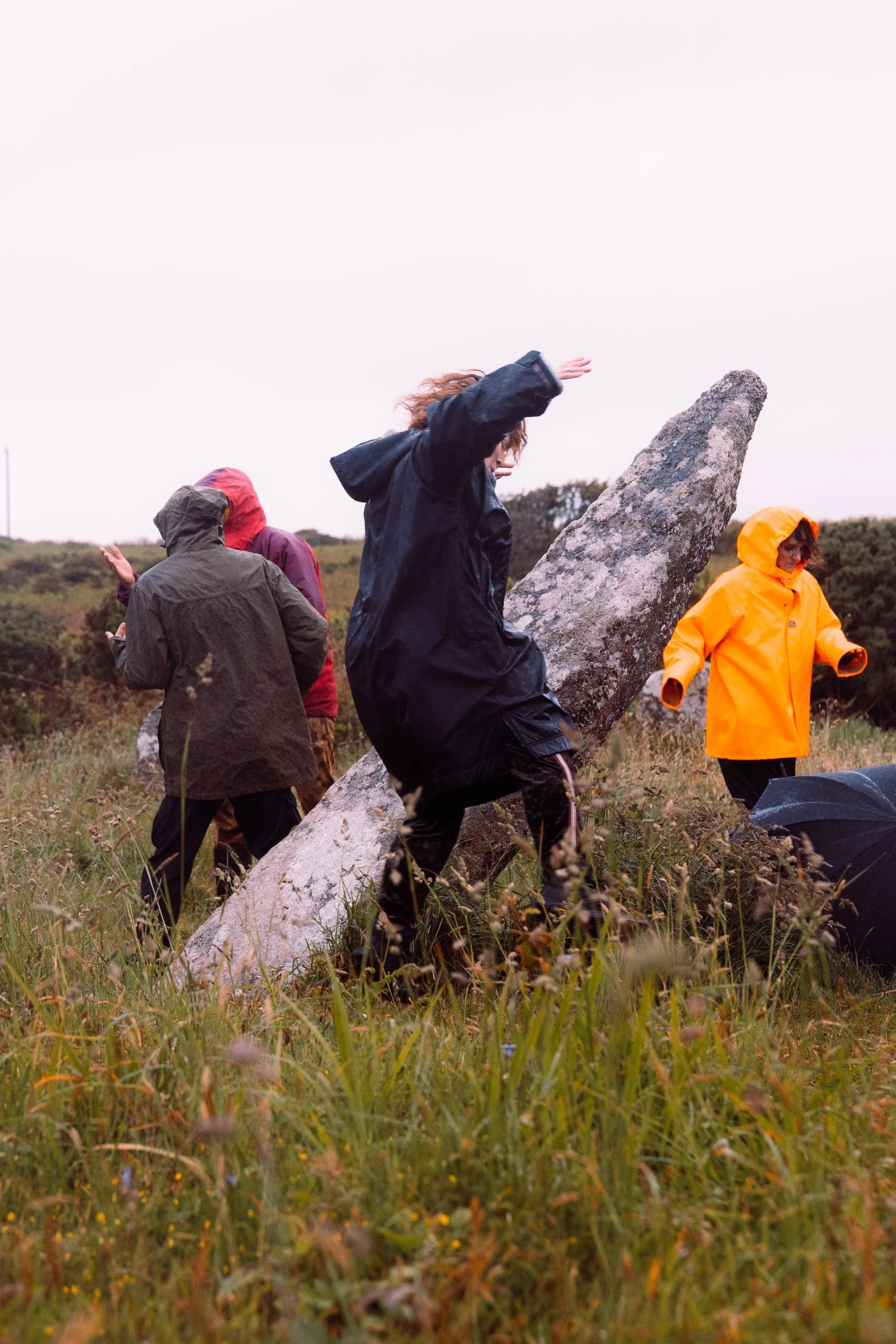
No Slowing, 2026
'Tradition is a river, not a glacier. Folk dances aren't something that existed just in the past, ready to be sucked into the present, fully formed and ripe for presentation. They are constantly shifting forms through which we express ourselves in celebration and in protest...They're always evolving, only 'folk' when they've receded far enough into the past to be reconvened when someone needs a cultural lift or wants to prove a certain political point. Traditional dances grow from ordinary steps, the kind people do at home with friends and family. Rules and regulations are imposed on a movement language in order to teach, perform and judge it.'
(Warren, 2023, Dance Your Way Home)
No Slowing was a project that happened in West Penwith, Cornwall in 2026. I worked with a group of my peers to explore how my interests in folk dance, working with landscape as stimulus and rave/festival culture. It was an attempt to find a way to make a dance that followed folk principles (from the folk, rooted in place, with steps that mirrored the natural landscape), but that avoided nationalistic ideas of ‘tradition’. My dance research over the last two years was about finding movement that is informed by place, people and values.
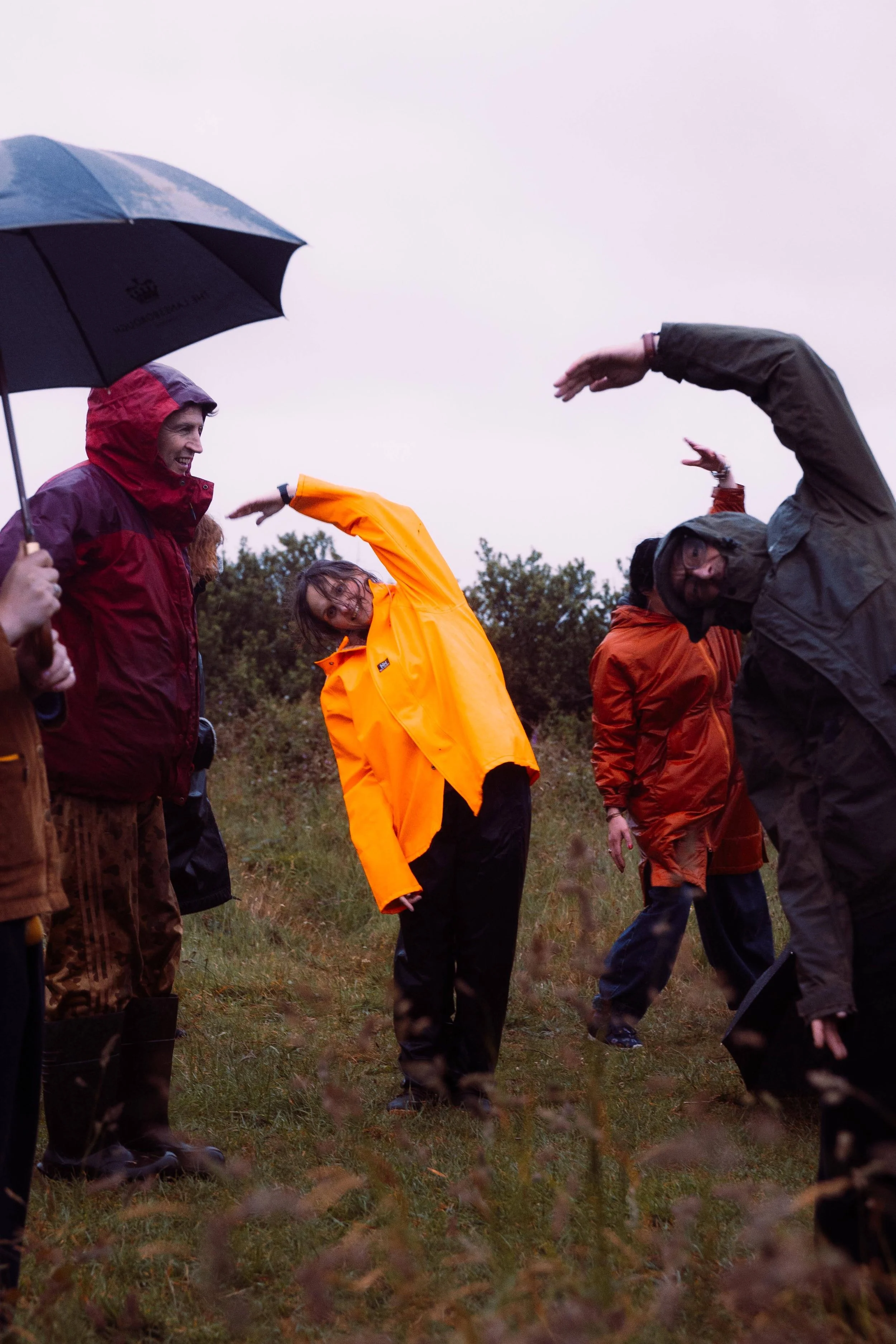
One of the participants in the Cornish project, is of Scottish/Irish ethnicity and is a traveller. She introduced the idea of the ‘carrying stream’ to our group. This is from the thinker, poet and Scotsman Hamish Henderson and describes how it’s vital that we feel that link to the past and to our ancestors, but also acknowledge how we change it when we pick it up. 'A live culture is rooted but always in motion, open-ended, always unfinished, always in the process of becoming.' (McFadyen, 2019). In this way, I can see how the work I was doing with my collaboration with Sádé Budhlall on Land Lines, Our Common Sky: The Procession, and No Slowing was using dance as a creative means to link ourselves to the land, to each other and to our ancestry. In some ways, the difficulties all of these groups had with accessing dance (their worries about their bodies, their conception of themselves as being bad at it, dancing in a public space that was not a dance floor) were all symptoms of the harm that us white people, especially English people, have done to ourselves by separating ourselves from our cultural lineage. The industrial revolution separated us from traditions that were carried through or marked by work or shifts in the seasons, the colonial project separated us from knowing who we are and, at the same time, the cultural diversity that this brought to England has been questioned or, in the worst cases, rejected. Within the group I was working with in Cornwall there was a reticence to identity as ‘English’. We were: Welsh, Scots, Irish and Cornish - all cultures that have their own experience of colonialism. And yet, we were meeting on English soil and do carry the privileges afforded to white people, whether we always feel that or not. By dancing together we could start talking about all of this. One participant wrote afterwards that what she had not expected was how dancing together with intention helped us to have better conversations: “It made me think about other things in new and interesting ways…for example, the wider topic of traditional and who gets to decide what that is, how old it needs to be and what it needs to look like…Also, songs and partying and what is the ‘right’ way to engage with ancient and revered spaces, I had never thought of raving as folk”.
To hear me speaking about it, check out this video.